
If you have been picturing summer dinners on a new paver patio, the first question on your mind is probably the budget. After years of designing and installing patios across Middlesex, Somerset, and Monmouth Counties, I can tell you the honest answer up front: the price depends on your yard, your material choices, and most of all on what gets built beneath the surface. That last part matters more here in Central New Jersey than almost anywhere else, and I will explain exactly why.
This guide walks through real 2026 pricing for paver patios in our area, the six factors that move a quote up or down, a sample budget for a typical backyard project, and where it makes sense to spend or save. By the end, you will know what a fair estimate looks like before you ever pick up the phone.
The Quick Answer: Paver Patio Cost in Central NJ
A professionally installed paver patio in Central New Jersey typically costs $20 to $45 per square foot, including excavation, base preparation, materials, and labor. Most homeowners in towns like East Brunswick, Edison, Piscataway, and Princeton invest between $8,000 and $14,000 for a standard 400 square foot patio. Smaller patios can start around $4,500, while large designs with premium natural stone, seat walls, or fire features can climb past $25,000.
Those ranges are wide for a reason. Two patios with identical square footage can differ by thousands of dollars based on soil conditions, access, and design. Let us break down where the money actually goes.
Paver Patio Cost Per Square Foot by Material
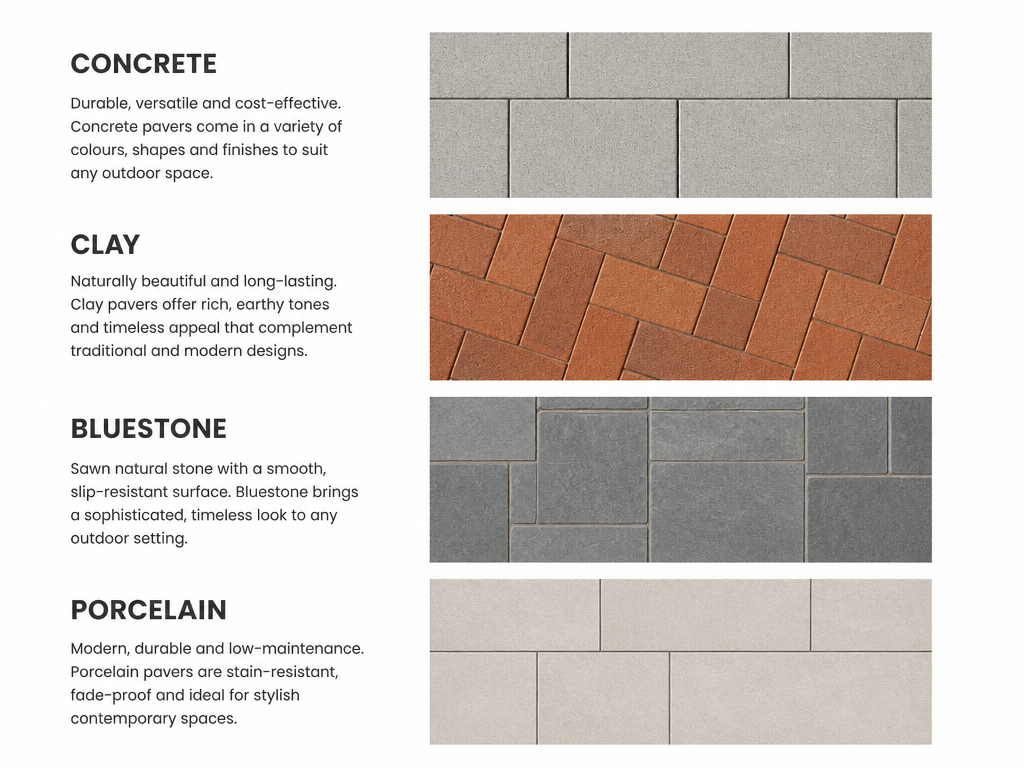
Your paver choice sets the tone for the whole project, both visually and financially. Here is what homeowners across Central Jersey are paying per installed square foot in 2026:
| Paver Material | Installed Cost (per sq ft) | Best For |
|---|---|---|
| Concrete pavers | $20 to $30 | Budget-friendly projects with a huge range of colors and styles. |
| Clay brick pavers | $25 to $35 | Classic colonial looks that never fade, popular near Princeton. |
| Bluestone and natural stone | $30 to $45 | Premium, timeless patios with one-of-a-kind texture. |
| Porcelain pavers | $35 to $45+ | Sleek modern designs that resist stains and fading. |
Keep in mind that the pavers themselves are only part of the bill. Standard concrete pavers run about $4 to $8 per square foot for material alone. The rest of your investment covers excavation, crushed stone base, bedding sand, edge restraint, skilled labor, and cleanup. We install manufactured lines from Unilock, Belgard, Techo-Bloc, and EP Henry, all of which are engineered and rated for northeastern freeze-thaw conditions.
The 6 Factors That Drive Your Patio Quote
1. Patio Size
Square footage is the single biggest cost driver, but the math is not perfectly linear. Fixed costs like equipment mobilization and material delivery get spread across the whole job, so a small 200 square foot patio often lands near the top of the per square foot range, while a 600 square foot patio benefits from economies of scale.
2. Paver Material and Pattern
As the table above shows, moving from standard concrete pavers to bluestone can add 50 percent or more to your total. Pattern matters too. A simple running bond costs less to lay than a herringbone field with a soldier course border and contrasting banding.
3. Base Preparation and Drainage
This is the make or break line item in Central New Jersey. Much of Middlesex and Somerset County sits on clay heavy soil that holds water and expands when it freezes. A quality installation here means excavating 8 to 12 inches, compacting crushed stone in layers, and often adding geotextile fabric with perforated drainage pipe, which adds roughly $2 to $4 per square foot. It is also the reason bargain patios in our area heave and settle within three to five years while properly built ones stay flat for decades.
4. Site Conditions and Access
A flat, open backyard with clear truck access in Monmouth Junction or Kendall Park costs less per square foot than a sloped lot or a tight side yard in an older Edison or Highland Park neighborhood where materials have to be wheeled in by hand. Slopes, mature tree roots, and existing concrete removal all add labor hours.
5. Design Complexity
Curved edges, inlays, multiple paver styles, steps, and grade transitions all take more cutting and more time than a clean rectangle. Beautiful, but budget accordingly.
6. Added Features
Seat walls, fire pits, lighting, and outdoor kitchens are priced separately from the patio field itself. We will cover those numbers in a moment.
Sample Budget: A 400 Square Foot Patio in Central NJ
Here is how a typical mid range project shakes out. This example assumes a flat backyard with decent access, standard concrete pavers, and full base preparation for clay soil, landing around $11,000 total:
- Excavation, soil disposal, and base work: roughly a third of the budget, and the part you should never let a contractor shortcut
- Pavers, base stone, sand, and edge restraint: roughly a third, varying with your material choice
- Skilled labor, cutting, compaction, and finishing: the final third, including polymeric sand joints and cleanup
When you compare quotes, ask each contractor to itemize these same categories. If one bid is dramatically lower, the savings almost always come out of the base, and that is exactly where you cannot afford to cut.
Why Central New Jersey Patios Cost What They Do
National cost guides miss the local realities that shape pricing in our corner of the state. Four things make patio construction here different:
- Clay soil: Much of Central Jersey sits on dense clay that drains poorly. Without a deep compacted base and drainage planning, trapped water freezes, expands, and lifts pavers out of plane.
- Freeze-thaw cycles: Our winters swing above and below freezing dozens of times per season. The frost line in New Jersey reaches about 36 inches, which is why footings for attached structures and proper sub base depth matter so much.
- Permits vary by town: An at-grade patio is often exempt from a construction permit, but zoning rules, setbacks, and impervious surface limits differ between South Brunswick, East Brunswick, Princeton, and other municipalities. Properties near streams or wetlands can also trigger NJDEP review.
- Utility marking: New Jersey law requires calling NJ 811 before any excavation so underground gas, electric, and water lines get marked. It is free, and a reputable contractor handles it as standard procedure.
Local labor rates also run higher in Central Jersey than the national average, which is reflected in every honest quote you receive.
What Popular Patio Add-Ons Cost
Most of the patios we design become full outdoor living spaces over time. Here is what the most requested upgrades typically add in our market:
- Seat wall: $3,000 to $8,000 depending on length and material, and it doubles as extra seating for gatherings
- Fire pit: $1,500 to $4,000 for a built in natural stone or block unit, with gas models at the higher end
- Outdoor kitchen: built in grill islands start around $5,000 and scale up with counters, storage, and appliances
- Low voltage lighting: pricing varies widely with fixture count and quality, so ask for it as its own line item
A smart approach for many families is phasing. We design the full vision up front, install the patio field first, and add the fire pit or kitchen the following season without redoing any work.
Does a Paver Patio Add Value to Your Home?
In our market, yes. Outdoor living space is one of the features Central Jersey buyers ask about most, and industry reports consistently show patios recovering a large share of their cost at resale. Beyond the resale math, a paver patio adds value you use every week: an outdoor dining room from April through October, a safer and cleaner surface than a worn lawn, and curb appeal that sets your home apart.
Pavers in particular hold their value better than poured concrete here because of our climate. A slab that cracks in a freeze-thaw cycle needs to be replaced or patched with a visible scar. A paver that settles gets lifted, re-bedded, and reset in an afternoon. With a routine sweep of fresh polymeric sand every few years and an optional sealer, a well built paver patio lasts 30 to 50 years.
How to Save Money Without Cutting Corners
- Choose a simple shape. Rectangles and gentle curves waste less material than intricate layouts.
- Pick concrete pavers that mimic stone. Modern textured lines from Techo-Bloc and Belgard capture the natural stone look at a much friendlier price.
- Schedule in the off season. Late fall and early spring bookings often come with more flexible timelines.
- Phase the project. Patio now, fire feature later, with one master design guiding both.
- Never cut the base. Saving $2,000 on excavation today is the most expensive decision you can make on a patio in clay country.
Get an Accurate Paver Patio Quote for Your Central NJ Home
Every yard in our service area is a little different, which is why the only number that truly matters is a written, itemized estimate for your specific property. At Outdoor Hardscape, we are a fully insured hardscaping and landscaping contractor based in Kendall Park, serving homeowners throughout Middlesex, Monmouth, Somerset, and Union Counties, including South Brunswick, East Brunswick, Edison, Piscataway, Princeton, and Monmouth Junction.
Our patio design and installation service covers everything discussed in this guide: site evaluation, drainage planning for New Jersey clay soil, full depth base construction, and premium pavers from Unilock, Belgard, Techo-Bloc, and EP Henry. We also build the walkways, retaining walls, fire pits, and outdoor kitchens that turn a patio into a complete backyard.
Frequently Asked Questions About Paver Patio Costs in NJ
Q: How much does a 20×20 paver patio cost in New Jersey?
A: A 20 by 20 foot patio covers 400 square feet, and in Central New Jersey that size typically costs $8,000 to $14,000 professionally installed. The final number depends on your paver material, soil conditions, and how much base preparation your site needs. Premium natural stone or added features like seat walls will push the total higher.
Q: Are pavers cheaper than a concrete patio?
A: Poured concrete usually costs less upfront, often $5 to $10 per square foot for a basic slab. Pavers cost more to install but handle New Jersey freeze-thaw cycles far better, and individual pavers can be lifted and reset instead of replacing a cracked slab. Over 20 to 30 years, pavers are often the better value.
Q: Do I need a permit for a paver patio in New Jersey?
A: It depends on your municipality. Many Central New Jersey towns treat an at-grade patio as exempt work, but some have zoning or impervious surface rules that apply, especially for larger patios or lots near wetlands. Always confirm with your local construction office before breaking ground.
Q: How long does a paver patio last in New Jersey?
A: A properly installed paver patio lasts 30 to 50 years in New Jersey. The base is what determines that lifespan, so a deep, well compacted crushed stone base with good drainage matters more than the pavers themselves. Occasional joint sand refreshes and sealing keep it looking new.
Q: What is the cheapest time of year to build a patio in New Jersey?
A: Late fall and early spring are typically the most flexible times to schedule, since demand peaks from May through September. Booking in the off season can shorten your wait and sometimes improves pricing. Winter installs are possible in mild stretches but frozen ground can delay excavation.
Q: How long does paver patio installation take?
A: Most residential paver patios in Central New Jersey take two days to one week from excavation to final joint sand. Larger projects with seat walls, steps, or fire features can take one to two weeks. Weather and permit timing are the most common causes of delay.
Q: Is a paver patio a good investment for home value?
A: Yes. Patios consistently rank among the outdoor projects with the strongest return, and industry reports commonly cite recovery of a large share of the cost at resale. In the Central New Jersey market, usable outdoor living space is a real selling point for buyers.
Q: Why do paver patio quotes vary so much between contractors?
A: The difference is almost always in what is under the pavers. A low quote often means a shallow base, minimal compaction, or no drainage planning, which leads to settling and heaving within a few years. Ask every contractor for an itemized estimate that spells out excavation depth, base material, and compaction method.