
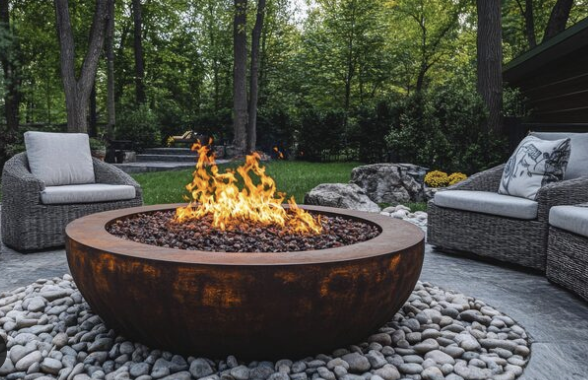
A Gas Fire Pit can turn a New Jersey backyard into a comfortable outdoor gathering space, but it is not the only option. Many homeowners in Kendall Park, South Brunswick, Princeton, East Brunswick and nearby Central Jersey communities also love the classic feel of a wood-burning fire pit. Both choices can add warmth, atmosphere and year-round use to your patio. The better choice depends on how you plan to use the space, how much maintenance you want, your property layout, local fire-safety rules and the overall look of your outdoor living area.
For many NJ homeowners, the fire pit decision comes down to lifestyle. Do you picture the crackle of real logs, the smell of seasoned firewood and a campfire-style experience? Or do you want a cleaner, easier, push-button flame that is ready for a quick weeknight gathering after dinner? Both can be beautiful when designed properly. Both also require smart planning, especially in a state where local ordinances, fire codes, burn restrictions, wind conditions and neighborhood density can affect what is practical.
This guide explains the pros and cons of wood-burning and gas fire pits, with a special focus on what New Jersey homeowners should consider before installing one. Whether you are upgrading an existing patio or building a full backyard retreat, the goal is to help you choose a fire feature that looks good, functions well and fits the way your family actually lives outdoors.
Gas Fire Pit vs. Wood-Burning Fire Pit: The Quick Difference
A wood-burning fire pit uses seasoned firewood as fuel. It creates a natural flame, produces smoke, leaves ash and needs to be started, managed and fully extinguished after each use. A gas fire pit uses either natural gas or propane. It is designed with a burner system, ignition control, fire media such as lava rock or glass, and proper ventilation. It produces an adjustable flame without logs, ash or flying embers.
The difference may sound simple, but it affects almost every part of your outdoor living experience: cost, cleanup, safety, placement, comfort, neighborhood impact, design flexibility and long-term maintenance. In tighter suburban neighborhoods, the smoke and ember concerns of wood may carry more weight. On larger properties, the traditional experience of wood may feel worth the extra effort.
Why Many NJ Homeowners Choose a Gas Fire Pit
1. A Gas Fire Pit Is Easy to Use
The biggest advantage of a gas fire pit is convenience. Many systems can be lit with a switch, key valve or electronic ignition. There is no need to stack logs, store wood, nurse kindling or wait for the fire to build. When the evening is over, the flame can be shut off quickly and cleanly.
That convenience matters for busy households. Parents who want to enjoy the patio after the kids finish homework, homeowners who entertain often, and people who want outdoor ambiance without a long setup usually appreciate gas. It makes the fire pit feel like part of daily living rather than a special project.
2. Gas Is Cleaner and More Neighbor-Friendly
A properly installed gas fire pit does not produce the same smoke, ash or wood smell as a traditional fire. That can be a major benefit in New Jersey neighborhoods where homes are close together, patios sit near fences, and smoke may drift toward a neighbor’s yard, windows or outdoor dining area.
Smoke is one of the biggest reasons backyard fires become a nuisance. Even when a wood fire is legal, windy conditions or damp firewood can create smoke that makes the experience uncomfortable. Gas offers a cleaner burn and is often better suited for suburban lots, townhome-style outdoor spaces and patios where guests will be seated close to the flame.
3. Gas Fire Pits Fit Modern Patio Designs
Gas fire features are highly flexible from a design standpoint. They can be built into seat walls, installed in square or rectangular fire tables, placed at the center of a paver patio, or integrated into a larger outdoor living layout with kitchens, pergolas and sitting areas.
For homeowners investing in a polished hardscape project, gas often delivers a more finished look. Fire glass, lava stone, decorative burners and custom masonry can be selected to match the style of the patio. The result can feel more like an outdoor living room and less like a campsite.
4. Gas Reduces Cleanup
Wood fires leave ash, charred debris and soot. Over time, that mess needs to be removed from the fire pit, and surrounding pavers may need additional cleaning. Gas fire pits require maintenance too, but routine cleanup is usually lighter. Homeowners generally need to keep the burner area clear, inspect the fire media, protect the system from debris and schedule service when needed.
For many families, the lower cleanup commitment is a deciding factor. A fire pit should make the patio easier to enjoy, not add another chore to the weekend list.
Why Some Homeowners Still Prefer Wood-Burning Fire Pits
1. Wood Creates a Traditional Fire Experience
There is no denying the appeal of a real wood fire. The sound, smell and movement of burning logs create a natural atmosphere that gas cannot fully copy. For homeowners who enjoy camping, rustic backyard gatherings, roasting marshmallows or a classic outdoor fire experience, wood has an emotional pull.
A wood-burning fire pit can also feel more casual. It invites people to gather around, add another log and stay a little longer. If your backyard vision leans natural, rustic or woodland-inspired, wood may fit the mood better than a sleek gas feature.
2. Wood Fire Pits May Cost Less Up Front
In many cases, a simple wood-burning fire pit costs less to install than a gas fire pit. It does not require a gas line, propane connection, burner kit or ignition system. For homeowners who want a straightforward fire area on a larger patio, wood may offer a lower entry cost.
However, the full cost picture depends on the design. A custom masonry wood-burning fire pit with seating walls, drainage considerations and premium materials can still be a significant investment. Homeowners should compare complete project pricing rather than assuming wood is always the budget option.
3. Wood Can Produce More Heat
Traditional wood fires often feel hotter than decorative gas flames, especially when several seasoned logs are burning. If your main goal is warmth on colder fall evenings, wood may provide a stronger campfire-style heat experience.
That said, heat output depends on fire pit size, wind exposure, seating distance and design. Some gas fire pits can provide comfortable warmth, but many are built primarily for ambiance. A professional design conversation should include how many people you want to seat, how close they will sit and whether warmth or visual appeal is the priority.
New Jersey Fire Pit Rules: What Homeowners Should Know
Before choosing a wood-burning or gas fire pit, NJ homeowners should understand that fire pit rules can involve state fire code, local ordinances, fire marshal requirements, homeowners association rules and temporary fire restrictions. Requirements may vary by municipality, and they can change during dry or windy periods.
Important: This article is for general planning and design information. Before installing or using a fire pit, homeowners should check with their local fire official, construction department, zoning office and HOA, if applicable.
New Jersey fire-code guidance commonly distinguishes between open burning, bonfires, recreational fires and fires in approved containers. General rules often address minimum distance from structures, combustible materials, property lines, attendance, extinguishing equipment and acceptable fuel. Some local summaries state that recreational fires should be limited in size, kept away from structures and combustible materials, attended at all times, and supported by a hose, fire extinguisher or other approved extinguishing method.
For homeowners in Kendall Park and the South Brunswick area, it is especially important to confirm local requirements before installing any permanent fire feature. South Brunswick’s Bureau of Fire Safety provides permit information for activities regulated under the Uniform Fire Code, and fire officials may have specific requirements depending on the type of installation, fuel source and property conditions.
Wood-burning fire pits usually face more restrictions because they involve open flame, smoke, embers and combustible fuel. Gas fire pits may still require proper installation, code compliance and safe clearances, especially if they connect to natural gas, use propane, sit near structures or are incorporated into a covered outdoor area. A professional hardscape installer can help design the feature, but final approval requirements should always be confirmed locally.
Safety Considerations for Wood-Burning Fire Pits
Wood-burning fire pits require active supervision. A responsible adult should remain present until the fire is fully extinguished. Embers can stay hot long after the flame looks low, and wind can move sparks toward furniture, mulch, fences, shrubs or the home.
Homeowners should use only seasoned dry firewood. Burning trash, leaves, yard waste, treated lumber, painted wood or construction debris can create smoke, odor, air-quality concerns and potential code violations. The fire should be kept small and manageable, with a fire extinguisher, hose, sand or another approved extinguishing method nearby.
Placement is also critical. A fire pit should not be squeezed into a tight corner of the patio simply because it looks nice on paper. It needs adequate clearance from the house, deck, shed, fence, pergola, overhangs, trees, furniture, cushions and other combustible materials. The safest design is one that considers real-life use, including where guests will sit, where children may walk, and how wind typically moves through the yard.
Safety Considerations for a Gas Fire Pit
A gas fire pit eliminates ash and flying wood embers, but it still needs careful design and professional installation. Natural gas and propane systems must be planned correctly, with proper burners, valves, ventilation, shutoff access and clearance. The fire feature should be built with materials rated for heat exposure and installed according to manufacturer instructions and applicable codes.
Propane units need space for tank access and ventilation. Natural gas units require gas-line planning, and that work should be handled by properly qualified professionals. Homeowners should also avoid placing combustible items on or near the fire feature, including pillows, blankets, serving trays, paper products and seasonal decorations.
Gas fire pits are often easier to manage, but they are not maintenance-free. Burners can become blocked by debris, ignition systems can wear over time, and fire media should be kept clean and properly positioned. A protective cover can help extend the life of the unit when it is not in use.
Cost Comparison: Wood-Burning vs. Gas Fire Pit
Cost depends on size, materials, site conditions and design complexity. A basic wood-burning fire pit is often less expensive because it does not require a gas connection. A gas fire pit usually has higher upfront costs because it may involve a burner kit, gas line, propane setup, ventilation details and specialized components.
However, upfront cost is only one part of the decision. Wood requires ongoing fuel storage, ash cleanup and more frequent hands-on management. Gas may cost more to install, but it can be easier to use regularly. If the convenience means your family uses the patio more often, the value may be higher over time.
Homeowners should also consider the broader hardscape investment. A fire pit is rarely just a fire pit. It affects patio size, seating layout, traffic flow, lighting, retaining walls, drainage, privacy screening and outdoor furniture placement. A lower-cost fire feature that does not fit the space well can become frustrating. A properly designed fire area can become the centerpiece of the backyard.
Design and Placement: Which Fire Pit Works Best for Your Yard?
Choose Gas If You Want a Finished Outdoor Living Room
A gas fire pit is often the better fit for homeowners who want a refined patio that feels like an extension of the home. It works well with modern pavers, seat walls, outdoor kitchens, dining zones and low-maintenance landscaping. Because the flame is easier to control, gas can also be more comfortable for frequent entertaining.
Gas is especially appealing for smaller suburban yards where smoke could bother neighbors. It is also a strong choice for homeowners who want a fire feature near a primary seating area, provided clearances and codes are satisfied.
Choose Wood If You Want a Natural Gathering Space
A wood-burning fire pit may be the right choice for a larger yard, a more rustic patio or a homeowner who truly enjoys managing a real fire. It can pair beautifully with natural stone, boulder accents, Adirondack chairs and informal seating.
Wood works best when there is enough open space, good clearance, and a homeowner who is comfortable with cleanup and supervision. It may not be ideal for every dense neighborhood or every family schedule, but when the setting is right, it can create a memorable backyard experience.
Maintenance: What to Expect After Installation
Wood-burning fire pits need ash removal, occasional deep cleaning and attention to staining or soot on surrounding hardscape surfaces. Homeowners also need a dry, safe place to store firewood. Wet wood produces more smoke and can make the fire difficult to manage.
Gas fire pits need burner inspections, debris removal, occasional service and protection from weather. Fire media should not be overloaded or placed in a way that blocks the burner. If the flame pattern changes, the ignition becomes unreliable or there is any gas odor, the unit should be turned off and checked by a qualified professional.
In both cases, the surrounding patio should be designed for durability. Heat, foot traffic, furniture movement and weather exposure all matter. Choosing the right pavers, wall block, coping and joint material can help the fire pit area age gracefully.
Best Choice for NJ Homeowners: Wood or Gas?
For many New Jersey homeowners, a gas fire pit is the more practical choice. It is cleaner, easier to use, better for frequent entertaining and often more neighbor-friendly in suburban communities. It fits well into modern patio designs and helps families enjoy the backyard without smoke, ash or constant fire management.
A wood-burning fire pit is still a great option for homeowners who want an authentic campfire feel, have enough space, are comfortable with local rules, and do not mind the maintenance. It can be warm, rustic and memorable, especially in a yard with the right layout.
The best answer is not the same for every home. The right fire pit should match your property, your municipality’s requirements, your budget and the way your family wants to spend time outside. A thoughtful design process will consider seating, safety, views from inside the home, privacy, wind direction, lighting, drainage and long-term maintenance before construction begins.
Ready to plan your fire pit? Outdoor Hardscape designs and installs custom patios, fire pits, seating walls and outdoor living spaces for homeowners in Kendall Park, South Brunswick and surrounding New Jersey communities. Contact Outdoor Hardscape to discuss whether a wood-burning or gas fire pit is the right fit for your backyard.
FAQ: Wood-Burning and Gas Fire Pits in NJ
Q: Is a gas fire pit better than a wood-burning fire pit?
A: A gas fire pit is usually better for homeowners who want convenience, cleaner operation and less maintenance. A wood-burning fire pit may be better if you want a traditional campfire feel, more natural heat and do not mind smoke, ash and cleanup.
Q: Are fire pits allowed in New Jersey backyards?
A: Fire pits may be allowed in many New Jersey backyards, but rules depend on state fire code, local ordinances, property layout and temporary fire restrictions. Homeowners should check with their local fire official, zoning office and HOA before installing or using a fire pit.
Q: Do I need a permit for a gas fire pit in NJ?
A: A gas fire pit may require permits or inspections, especially if it involves a natural gas line, propane system, electrical ignition or permanent masonry installation. Requirements vary by municipality, so the safest step is to confirm with the local construction department and fire official before work begins.
Q: Which fire pit creates less smoke?
A: A gas fire pit creates far less smoke than a wood-burning fire pit when installed and used properly. This makes gas a popular choice in New Jersey neighborhoods where homes are close together and smoke could affect neighbors or outdoor seating areas.
Q: Can I put a fire pit on a paver patio?
A: Yes, a fire pit can often be incorporated into a paver patio, but it must be designed with the right materials, clearances and heat considerations. A professional hardscape installer can help determine the safest location and structure for the fire feature.
Q: What is the safest fire pit for a small backyard?
A: For many small backyards, a professionally installed gas fire pit is often the safer and more practical choice because it offers better flame control and less smoke. However, safety depends on proper placement, local code compliance, clearances, ventilation and responsible use.
Q: How far should a fire pit be from a house?
Distance requirements vary by fire type and local rules. Many fire-code summaries reference minimum clearances from structures and combustible materials, with different distances for open recreational fires and approved containers. Always confirm the exact requirement with your local fire official before installation.