
Introduction: Build It Right the First Time
You have finally decided to invest in your outdoor space. Maybe you are picturing a beautiful paver patio in your backyard, a retaining wall that finally fixes that slope problem along your property line, or a new driveway that gives your home the curb appeal it deserves. The excitement is real, and the possibilities are exciting.
But before a single stone gets laid or a post goes in the ground, there is one important step that many Central Jersey homeowners skip over: understanding New Jersey hardscaping permit requirements.
Skipping the permit process is one of the most common and costly mistakes homeowners make during outdoor renovation projects. It can lead to fines, mandatory teardowns, complications when selling your home, and issues with your homeowner’s insurance. The good news is that navigating the permit process does not have to be intimidating, especially when you work with an experienced local hardscaping contractor who knows the landscape of NJ zoning and building codes inside and out.
This guide walks you through everything you need to know, from what qualifies as a permitted project to how the process works in Middlesex County, Somerset County, and Monmouth County, and how Outdoor Hardscape can help you every step of the way.
What Is Hardscaping, and Why Do Permits Matter in New Jersey?
Hardscaping refers to the non-living, structural elements of your outdoor space. This includes patios, walkways, driveways, retaining walls, outdoor kitchens, pergolas, fire pits, steps, pool surrounds, and decorative stone features. Unlike planting a garden bed or adding mulch, these are permanent or semi-permanent structures that can affect drainage, property lines, and even neighboring properties.
New Jersey building codes and municipal regulations treat hardscaping projects much the same way they treat interior renovations. The state operates under the New Jersey Uniform Construction Code (UCC), and individual municipalities add their own local zoning ordinances on top of that. This means the rules can vary significantly depending on whether you live in Edison, South Brunswick, Marlboro, Freehold, or Bridgewater.
Permits exist for good reasons. They protect you, your neighbors, and the long-term value of your property. A permitted project has been reviewed by a local inspector who confirms it meets structural, drainage, and setback requirements. That kind of documentation matters enormously when you go to sell your home.
When Do You Need a Permit for Hardscaping in NJ?
This is the question homeowners ask most often, and the honest answer is: it depends on the scope of the project and your municipality. That said, here are some general rules that apply across most of Central Jersey.
You typically need a permit for:
- Retaining walls over 4 feet in height (measured from the bottom of the footing)
- Driveways that connect to a county or municipal road
- Outdoor structures like pergolas, gazebos, and covered patios that exceed a certain square footage
- Outdoor kitchens with gas lines or electrical connections
- Any project that alters natural drainage patterns on your property
- Grading and excavation work beyond a certain depth or area
- In-ground fire pits with gas connections
- Pool surrounds and decking attached to an existing structure
You may not need a permit for:
- Simple paver patios under a certain square footage with no structural footings
- Decorative walkways not connected to a public road
- Small garden walls under 4 feet with no surcharge load
- Surface-level gravel pathways
Keep in mind that even if a permit is not technically required, your municipality may still have setback requirements that dictate how close a structure can be to your property line, your home’s foundation, or a neighboring fence. Violating setback rules is a separate issue from the permit itself, and it can create significant legal headaches.
When in doubt, always check with your local building department or work with a contractor who already knows the rules for your town.
The Permit Process in Central Jersey: Step by Step
Understanding the process can take a lot of the stress out of getting started. Here is how it generally works in municipalities across Middlesex County, Somerset County, and Monmouth County.
Step 1: Project Assessment
Before applying for anything, you need a clear plan. Your contractor should provide detailed drawings or a site plan that shows the location of the proposed work, dimensions, materials, and how the project relates to your property lines and existing structures.
Step 2: Zoning Review
Some projects require zoning approval before a construction permit is issued. Your local zoning board will check that your project complies with local ordinances around setbacks, impervious surface coverage, and land use.
Step 3: Permit Application
The permit application is submitted to your local construction office. This typically includes project drawings, a property survey, and a description of materials and methods. Many NJ municipalities now accept online submissions.
Step 4: Review and Approval
Municipal reviewers assess the application. Timelines vary widely, from one week in some towns to several weeks in others. Complex projects or those near wetlands or flood zones may take longer.
Step 5: Inspections
Once the permit is approved and work begins, inspections may be required at key stages, such as after excavation, after footings are poured, and at project completion. A final inspection results in a certificate of approval.
Working with a licensed contractor who is familiar with the permitting process in your specific municipality can save weeks of back-and-forth and help ensure your application is complete the first time.
Impervious Surface Rules: A Key Consideration in NJ
One area that surprises many Central Jersey homeowners is the concept of impervious surface coverage. New Jersey has strict stormwater management regulations, and most municipalities limit the percentage of your lot that can be covered by impervious surfaces, meaning surfaces that do not allow water to pass through, like concrete, solid asphalt, and some types of pavers.
If you already have a driveway, a roof, and existing paved surfaces, adding a large patio could push you over your municipality’s allowable impervious coverage limit. This is not something to guess about. Exceeding the limit can result in your permit being denied or your project requiring costly drainage solutions to compensate.
The good news is that permeable pavers are an excellent solution. These interlocking paving systems allow rainwater to filter through the joints and into the ground beneath, which can significantly reduce your impervious surface calculation. Outdoor Hardscape designs and installs permeable paver systems across Central Jersey that meet NJ stormwater management standards while still delivering beautiful, durable outdoor living spaces.
Hardscaping and Home Value: Why It Pays to Do It Right
Properly permitted hardscaping projects are a smart investment in your home’s value. According to industry research, well-designed outdoor living spaces can yield a return on investment of 50 to 80 percent, with high-demand features like patios, outdoor kitchens, and professional driveways among the top value-adds for New Jersey homes.
More importantly, permitted work protects that investment. When a potential buyer’s home inspector discovers unpermitted work, it can trigger demands for removal, price reductions, or even kill the sale entirely. Lenders and title companies are increasingly scrutinizing unpermitted structures, especially in competitive markets like Princeton, Plainsboro, Woodbridge, and Old Bridge.
A permitted paver patio or retaining wall is not just a design feature. It is a documented, legally recognized improvement to your property. That documentation becomes part of your home’s record and transfers to the next owner.
Wetlands, Flood Zones, and Environmental Permits in NJ
Central Jersey has a significant amount of wetlands, flood plains, and environmentally sensitive areas, particularly near the Raritan River corridor, the Millstone River, and coastal zones closer to Monmouth County. If your property is near any of these areas, your hardscaping project may require additional environmental permits from the New Jersey Department of Environmental Protection (NJDEP).
The NJDEP regulates work within 300 feet of freshwater wetlands and within certain transition zones. Projects that involve grading, impervious surfaces, or drainage changes in these areas can require a Freshwater Wetlands Permit or a General Permit, depending on the scope of work.
This is a layer of the process that homeowners rarely anticipate. Outdoor Hardscape conducts a thorough site evaluation for every project and flags potential environmental permitting needs before work begins, saving clients from costly surprises mid-project.
How Outdoor Hardscape Handles the Permit Process for You
Outdoor Hardscape is a full-service hardscaping company serving homeowners throughout Central Jersey, including Middlesex County, Somerset County, Monmouth County, and Mercer County. Our team handles projects of every size, from simple paver walkways to complete outdoor living transformations.
Here is what sets our process apart:
Local expertise: We have worked with building departments in dozens of Central Jersey municipalities. We know what each town requires, how their reviewers think, and how to submit applications that move quickly through the approval process.
Design and documentation: We produce professional site plans, drawings, and project specifications that meet NJ building code requirements. Our documentation makes the permit application process straightforward for your local construction office.
Permit management: We handle permit applications on behalf of our clients, coordinate with municipal reviewers, schedule inspections, and obtain final approvals. You do not have to navigate any of that on your own.
Material selection guidance: We help you choose materials, like permeable pavers, that can work with your property’s impervious surface limitations while still achieving the aesthetic you want.
Our services include:
- Custom paver patios and pool surrounds
- Retaining walls and raised garden walls
- Driveway design and installation
- Outdoor kitchens and living areas
- Permeable paving systems
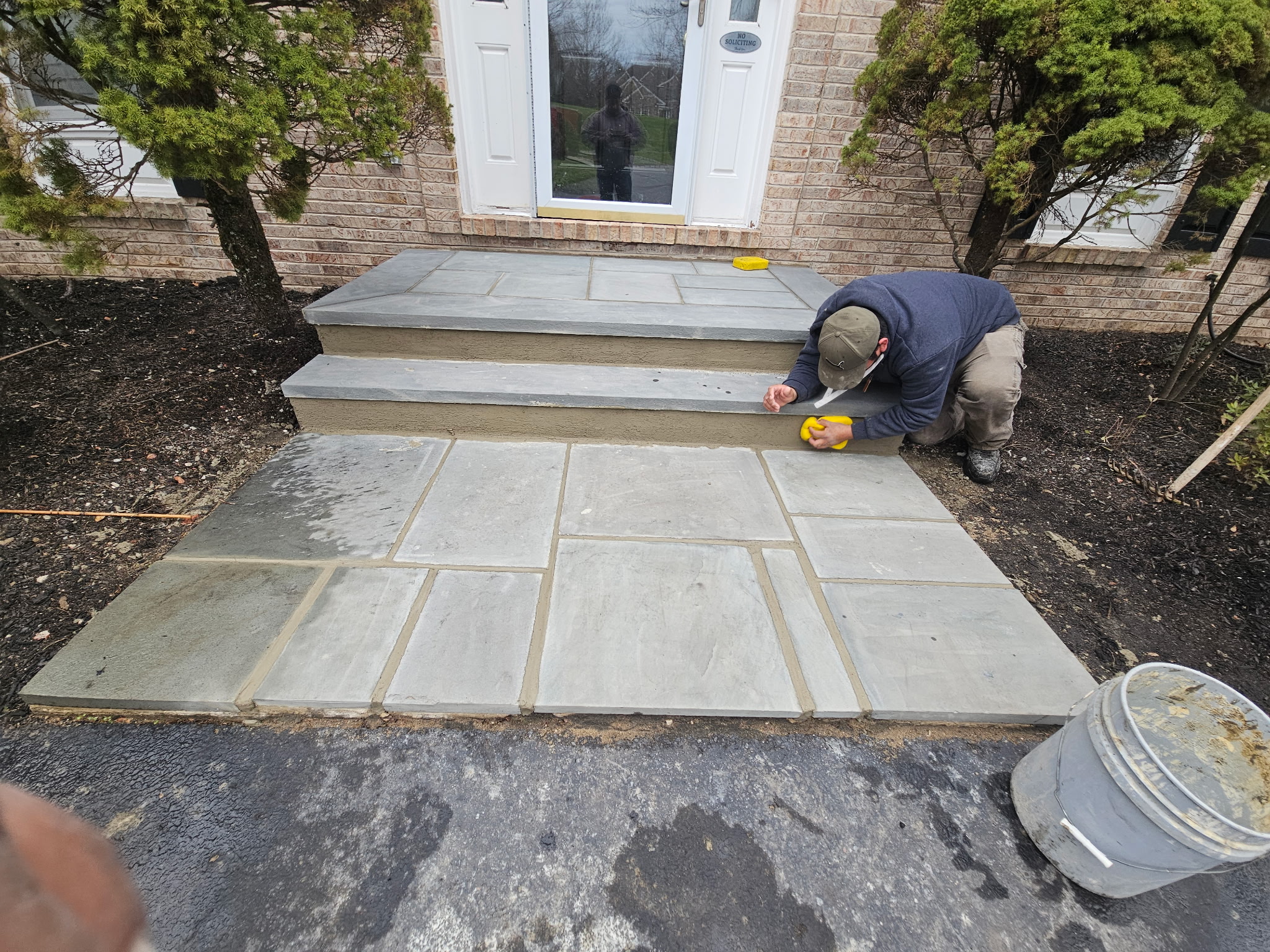
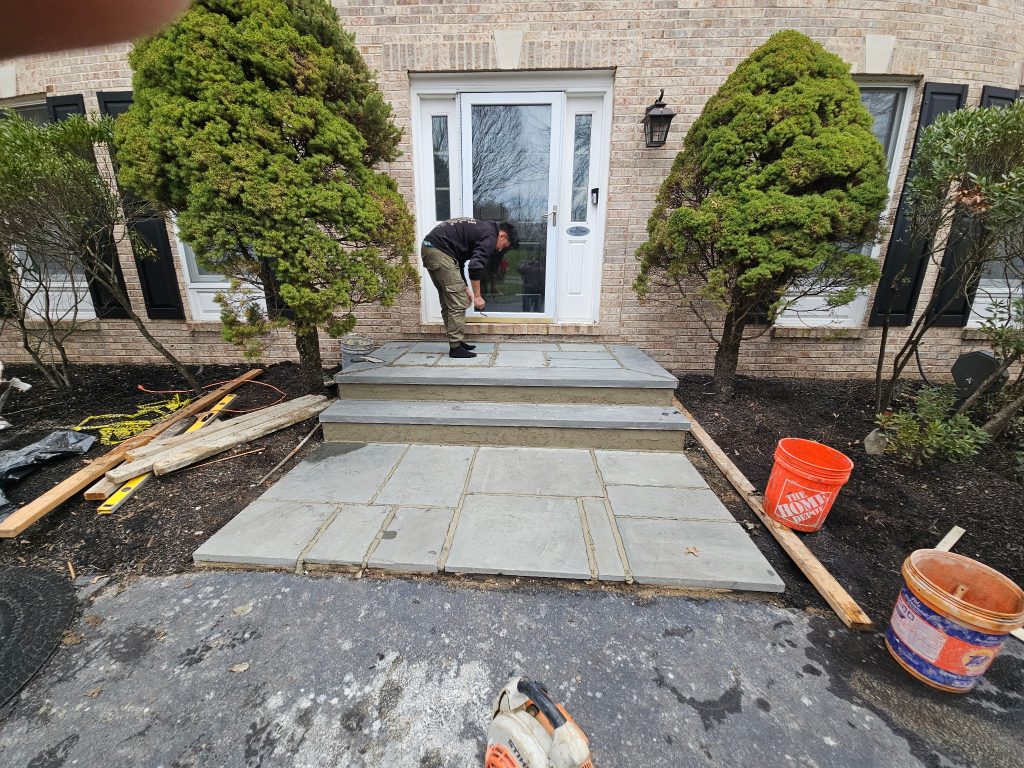
- Steps, walkways, and entry features
- Grading and drainage solutions
- Pergolas and shade structures
Whether you are starting from scratch or trying to figure out how to make a previous quote or plan compliant, we are happy to sit down with you and talk through your project.
Ready to Start Your Hardscaping Project the Right Way?
If you are a homeowner in Central Jersey thinking about a patio, retaining wall, driveway, or any other outdoor structure, the smartest first step is a conversation with a professional who understands both great design and the permitting landscape in your area.
Contact Outdoor Hardscape today to schedule a free consultation. We serve homeowners throughout Middlesex County, Somerset County, Monmouth County, and Mercer County, including Edison, South Brunswick, Marlboro, Freehold, Bridgewater, Princeton, Old Bridge, East Brunswick, and surrounding communities.
Call us at 908-294-6296 Visit us at www.outdoorhardscape.com to request your free project estimate. Let us help you build something beautiful, legal, and built to last.
Frequently Asked Questions About New Jersey Hardscaping Permits
Q: Do I need a permit for a paver patio in New Jersey?
A: It depends on the size of the patio and your municipality’s specific rules. Small paver patios at grade level may not require a structural permit, but they can still be subject to zoning setback requirements and impervious surface limits. Always check with your local building department or work with a licensed contractor before starting any project.
Q: How much does a hardscaping permit cost in NJ?
A: Permit fees in New Jersey vary by municipality and project scope. Most residential hardscaping permits range from $50 to several hundred dollars, with larger or more complex projects sometimes requiring multiple permits that each carry their own fee. Your contractor should be able to give you an estimated permit cost before work begins.
Q: What happens if I build a patio or retaining wall without a permit in NJ?
A: Building without a required permit in New Jersey can result in fines, a stop-work order, and in some cases a mandatory order to remove the unpermitted structure. It can also create problems when you sell your home, since unpermitted work may need to be disclosed and can complicate the closing process.
Q: Do retaining walls require a permit in New Jersey?
A: Yes, in most cases. Retaining walls over 4 feet in height, measured from the bottom of the footing to the top of the wall, generally require a construction permit in New Jersey. Shorter walls may not need a structural permit but could still be subject to setback and zoning rules.
Q: How long does it take to get a hardscaping permit in NJ?
A: Permit approval timelines vary by municipality, ranging from about one week in some towns to four to six weeks or more in others. Projects near wetlands or in flood zones that require NJDEP approval can take longer. Working with an experienced contractor who submits complete, accurate applications can help speed up the process.
Q: Can my hardscaping contractor pull the permit for me?
A: Yes. In New Jersey, licensed contractors can submit permit applications on behalf of homeowners for projects they are performing. This is actually the most common approach, since contractors are familiar with local requirements and can ensure the application includes all necessary documentation.
Q: What is an impervious surface and why does it matter for my project?
A: An impervious surface is any hard surface that does not allow water to soak into the ground, such as concrete, asphalt, or solid pavers. Most NJ municipalities limit the percentage of your property that can be covered by impervious surfaces to manage stormwater runoff. If your project would exceed your municipality’s allowed coverage, you may need to use permeable paving materials or add drainage features.
Q: Do outdoor kitchens require a permit in New Jersey?
A: Outdoor kitchens that involve gas line connections, electrical work, or significant structural construction typically require one or more permits in New Jersey. Even if the patio itself does not need a permit, the utility connections almost certainly will. A licensed contractor can help you identify which permits apply to your specific outdoor kitchen design.