
If your yard collects standing water after every rainstorm, you already know how frustrating and damaging poor drainage can be. Water pooling near your foundation, soggy patches in the lawn, and eroded garden beds are not just eyesores. Over time, they can cause serious structural damage to your home and significantly reduce your property value.
Homeowners across Central Jersey, from Princeton and Plainsboro to Monroe Township, East Brunswick, and South Brunswick, deal with drainage challenges year-round. New Jersey’s clay-heavy soils and frequent rain make effective yard drainage a real priority, not just a nice-to-have upgrade.
Two of the most popular and effective drainage solutions are the French drain and the dry creek bed. Both solve the same core problem, but they work differently, look different, and suit different yard conditions. Knowing which one fits your specific situation can save you time, money, and a lot of headaches down the road.
This guide walks through both options in plain language so you can make a confident, informed decision for your property.
What Is a French Drain?
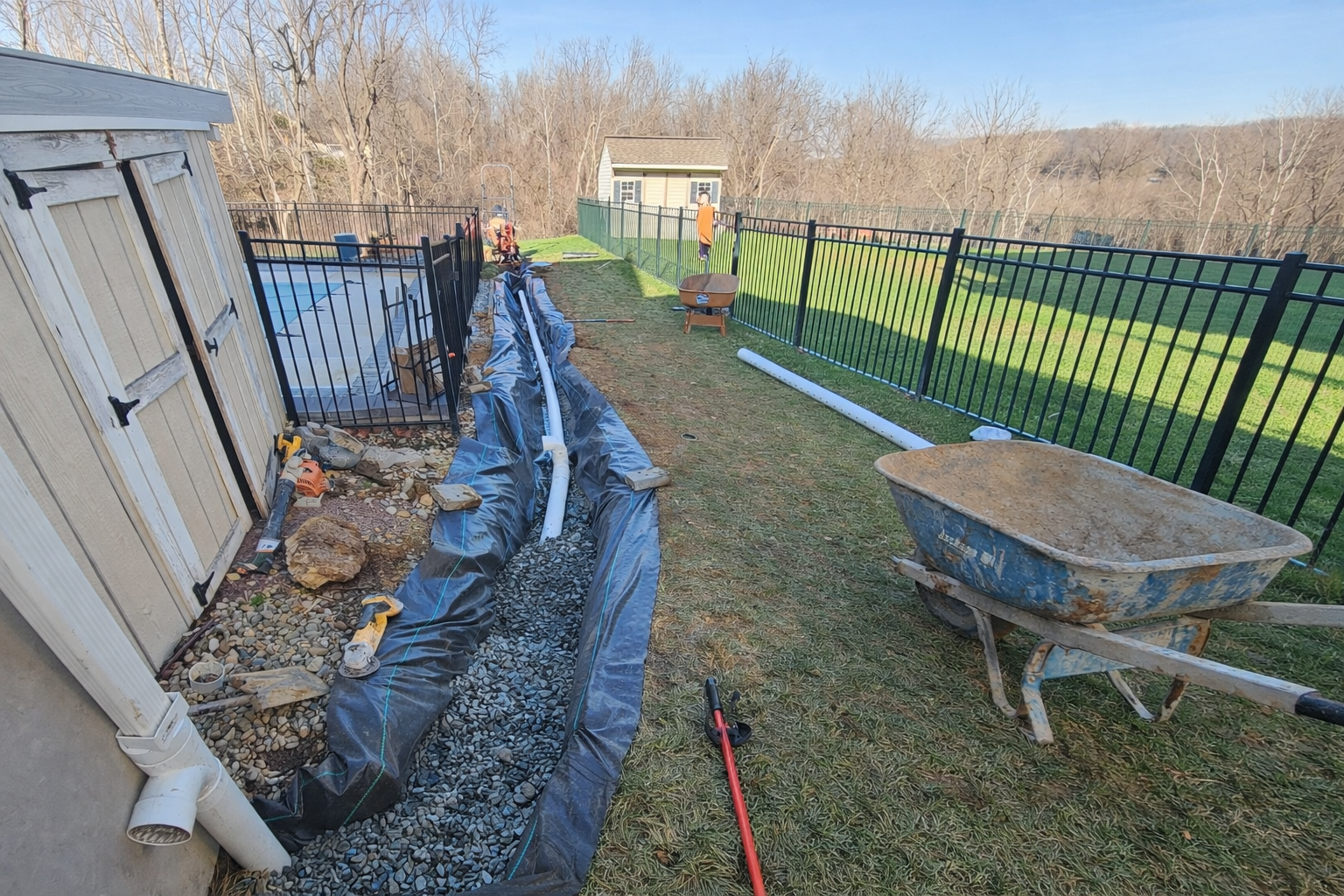
A French drain is an underground drainage system designed to redirect subsurface water away from problem areas. The basic structure involves a gravel-filled trench with a perforated pipe running through it. Water seeps into the gravel, enters the pipe through its perforations, and flows away from your home toward a designated outlet such as a storm drain, a dry well, or a lower point on your property.
How a French Drain Works
Water naturally moves from areas of high saturation to low saturation. A French drain takes advantage of this principle by creating a path of least resistance underground. As groundwater or surface water builds up, it drains into the gravel bed, enters the pipe, and gets carried away before it can pool or penetrate your foundation.
The system is typically installed between 18 inches and 24 inches deep, though depth varies depending on your soil type, the severity of the drainage issue, and your yard’s grade.
Where French Drains Work Best
French drains are ideal for:
- Foundation drainage issues: If water consistently collects near your home’s foundation, a French drain installed along the perimeter can redirect it safely away.
- Wet basement prevention: In areas like Monroe Township and Plainsboro where homes sit on low ground, French drains are a go-to fix for basement moisture problems.
- Flat or barely sloped yards: When there is not enough natural slope for water to drain on its own, a French drain provides that engineered path.
- Lawn areas with standing water: Water that sits on your lawn for days after rain indicates poor drainage, which a French drain can resolve effectively.
Pros of a French Drain
- Works underground, so it does not disrupt your yard’s appearance
- Handles large volumes of water efficiently
- Long-lasting when installed with quality materials (geotextile fabric, clean gravel, and durable pipe)
- Can be combined with surface drainage systems for comprehensive water management
Cons of a French Drain
- Requires professional excavation and grading
- Not visible, so it does not add aesthetic value
- Can clog over time with sediment if not installed with proper filter fabric
- Higher upfront cost compared to surface-only solutions
What Is a Dry Creek Bed?
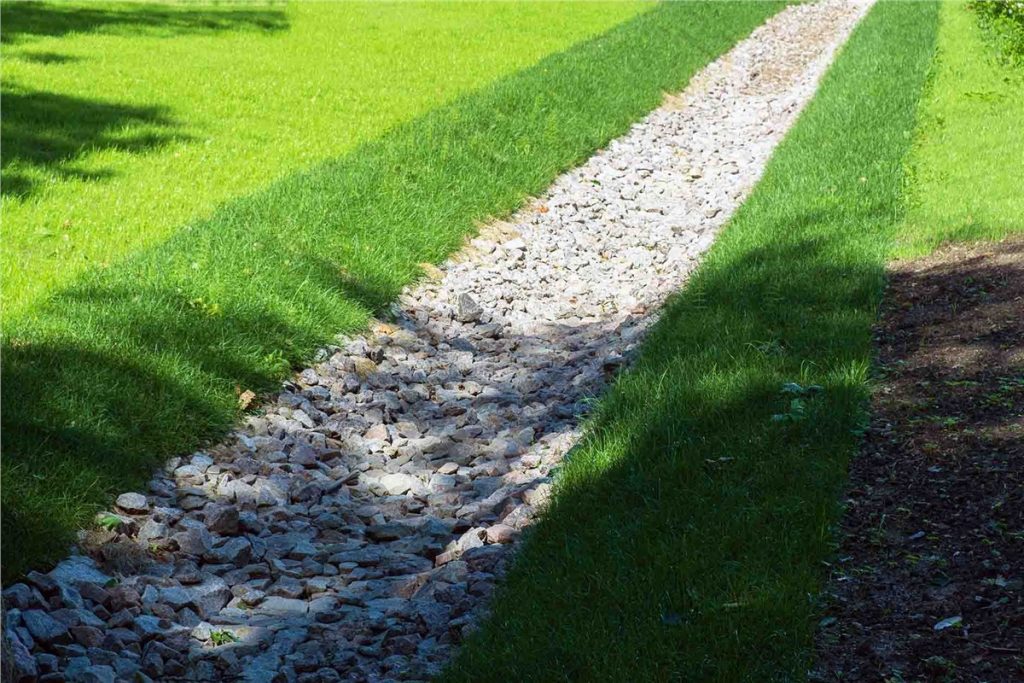
A dry creek bed is a landscaped channel designed to look like a natural streambed. It is built with various sizes of stone and river rock arranged along a shallow, graded trench. During heavy rain, the channel collects surface water and guides it toward a safe outlet. Between rainstorms, it serves as an attractive landscape feature.
How a Dry Creek Bed Works
Unlike a French drain, a dry creek bed works at the surface level. It gives stormwater runoff a defined path to follow rather than letting it spread across your lawn or pool in low spots. The gravel and stone slow the water down, reducing erosion, and direct it toward a storm drain, a rain garden, or a low corner of your property.
A properly designed dry creek bed mimics nature. The stones vary in size, native plants line the edges, and boulders are placed strategically to create visual rhythm. When done well, it looks like a real dried streambed that happens to run through your backyard.
Where Dry Creek Beds Work Best
Dry creek beds are ideal for:
- Sloped yards: If your yard naturally slopes, a dry creek bed can channel runoff along that grade beautifully.
- Erosion control on hillsides: Homes in hilly areas of Central Jersey, including parts of Hillsborough, Manville, and Rocky Hill, benefit greatly from creek beds that prevent soil erosion on slopes.
- Aesthetic landscaping goals: If you want a drainage solution that doubles as a landscape feature, a dry creek bed delivers both function and curb appeal.
- Rain garden integration: Dry creek beds pair naturally with rain gardens, directing water to a planted area where it can slowly infiltrate into the soil.
Pros of a Dry Creek Bed
- Adds significant visual interest and natural beauty to your yard
- Can increase property curb appeal and resale value
- Works well as part of a broader sustainable landscaping design
- Lower excavation depth compared to French drains
- Complements native plantings and pollinator-friendly landscaping
Cons of a Dry Creek Bed
- Handles surface runoff only, not subsurface water
- Requires periodic maintenance to remove debris and leaves
- Stones may shift over time and need resetting
- Not effective when the drainage problem is primarily underground
French Drain vs. Dry Creek Bed: A Side-by-Side Comparison
| Feature | French Drain | Dry Creek Bed |
| Works underground | Yes | No |
| Handles surface runoff | Partially | Yes |
| Visual landscaping appeal | Minimal | High |
| Best for flat yards | Yes | No |
| Best for sloped yards | Yes | Yes |
| Erosion control | Moderate | Excellent |
| Upfront cost | Moderate to high | Moderate |
| Maintenance needs | Low (with proper installation) | Moderate |
| Foundation protection | Excellent | Limited |
Which Drainage Solution Is Right for Your Central Jersey Yard?
The honest answer is: it depends on your specific yard conditions, drainage problem, and goals. Here is a simple way to think through it.
Choose a French drain if:
- Water is collecting near your home’s foundation
- Your yard is flat or has minimal slope
- You are dealing with soggy turf that stays wet for several days after rain
- You want a low-maintenance solution that works invisibly
Choose a dry creek bed if:
- Your yard has a natural slope that surface water follows
- You want your drainage solution to also serve as a landscaping feature
- Soil erosion on a hillside or slope is your main concern
- You are interested in a sustainable, naturalistic yard design
Choose both if:
- Your property has multiple drainage challenges, including both surface water and subsurface saturation
- You want comprehensive drainage management with aesthetic value
Many homeowners in South Brunswick, Princeton Junction, and Middlesex County opt for a combination approach. A French drain handles the underground moisture near the foundation while a dry creek bed manages surface runoff through the yard and ties into a rain garden or stormwater outlet.
How Proper Drainage Adds Value to Your Home
Drainage is one of those home improvement areas that often gets overlooked until there is a problem. But addressing it proactively is one of the smartest investments a homeowner can make.
Foundation protection: Water damage to a foundation is among the most expensive repairs a homeowner can face. Proper drainage prevents that water from ever reaching your foundation walls in the first place.
Landscape longevity: A yard that drains well supports healthier grass, trees, and garden beds. Plants sitting in waterlogged soil develop root rot and decline over time.
Curb appeal and resale value: A beautifully designed dry creek bed or a yard free of drainage problems makes a strong impression on potential buyers. Real estate professionals consistently note that drainage issues are among the top concerns flagged during home inspections in New Jersey.
Outdoor usability: When your yard drains properly, you get more use out of your outdoor space. No more soggy lawn areas that stay off-limits for days after rain.
What to Expect from a Professional Drainage Installation
Whether you choose a French drain, a dry creek bed, or a combination of both, professional installation makes a significant difference in how well the system performs and how long it lasts.
At Outdoor Hardscape, our team of experienced hardscaping designers starts every drainage project with a thorough site assessment. We evaluate your yard’s grade, soil type, existing drainage infrastructure, and the specific areas where water is causing problems. We then develop a drainage plan tailored to your property.
Our installation process covers:
- Grading and slope analysis
- French drain trenching, pipe laying, and gravel backfill with geotextile filter fabric
- Dry creek bed design and construction using natural stone and river rock
- Integration with existing landscaping and hardscaping elements
- Optional rain garden design for sustainable stormwater management
We serve homeowners throughout Central Jersey, including Princeton, Plainsboro, South Brunswick, Monroe Township, East Brunswick, Hillsborough, Manville, North Brunswick, and surrounding communities in Middlesex and Somerset counties.
Ready to Solve Your Yard Drainage Problems?
If standing water, soggy lawn areas, or erosion are affecting your yard, the right drainage solution can transform the way your outdoor space looks and functions.
Contact Outdoor Hardscape today to schedule a free consultation and site assessment. Our team will walk your property with you, explain your options clearly, and provide a detailed proposal so you know exactly what to expect before any work begins.
Call us at 908-294-6296 Visit us at www.outdoorhardscape.com Or fill out our online contact form and we will get back to you within one business day.
We proudly serve homeowners across Central Jersey and look forward to helping you create a yard that stays dry, looks great, and holds its value for years to come.
Frequently Asked Questions
Q: What is the difference between a French drain and a dry creek bed?
A: A French drain is an underground system using a perforated pipe in a gravel trench to redirect subsurface water away from problem areas. A dry creek bed is a surface-level landscaped channel made of natural stone that guides rainwater runoff across your yard while also serving as a decorative feature. French drains address underground water; dry creek beds manage surface runoff and erosion.
Q: How long does a French drain last?
A: A properly installed French drain with quality materials, including perforated pipe, clean gravel, and geotextile filter fabric, typically lasts 30 to 40 years or longer. Longevity depends heavily on installation quality, soil conditions, and whether the system was properly wrapped in filter fabric to prevent sediment buildup inside the pipe.
Q: Does a dry creek bed actually work for drainage?
A: Yes, a dry creek bed is an effective drainage solution for managing surface water runoff and controlling erosion, especially on sloped yards. It works by providing a defined, graded channel that directs water away from problem areas. For best results, it should be professionally designed with the correct slope and stone sizing.
Q: How much does it cost to install a French drain in New Jersey?
A: The cost of a French drain installation in New Jersey typically ranges from $2,000 to $10,000 or more depending on the length of the trench, depth required, soil conditions, and accessibility of the site. A professional site assessment will give you the most accurate estimate for your specific property.
Q: Can I install a French drain or dry creek bed myself?
A: While some homeowners attempt DIY drainage projects, professional installation is strongly recommended for both French drains and dry creek beds. Improper slope, inadequate pipe sizing, missing filter fabric, or poor outlet placement can cause a drainage system to fail, make existing problems worse, or void any property drainage warranties. A professional assessment ensures the system is designed and graded correctly the first time.
Q: Do dry creek beds require maintenance?
A: Dry creek beds require moderate maintenance to keep them functioning well. Leaves, twigs, and sediment can accumulate in the channel over time and slow drainage. A seasonal cleanout, along with resetting any stones that shift during freeze-thaw cycles in New Jersey winters, is typically all that is needed to keep the system performing properly.
Q: Which drainage solution adds more value to a home?
A: A dry creek bed adds more visible curb appeal and landscaping value because it functions as both a drainage system and a decorative landscape feature. A French drain adds value by protecting the foundation and preventing costly water damage, which directly supports a home’s structural integrity and helps it pass inspection when it is time to sell.
Q: Is a French drain necessary if I have a sump pump?
A: A sump pump handles water that has already entered your basement, while a French drain prevents water from reaching your foundation in the first place. Both can be used together as part of a comprehensive moisture management strategy for homes in low-lying or high-rainfall areas of Central New Jersey.
Summary
French drains and dry creek beds are both proven, effective drainage solutions for New Jersey homeowners. French drains work underground and are best for flat yards, foundation drainage, and subsurface water issues. Dry creek beds work at the surface and are ideal for sloped yards, erosion control, and homeowners who want a landscaping feature that also manages runoff. Many properties benefit from both. The most important step is to have a professional evaluate your specific yard conditions before choosing a solution.