
As New Jersey enters October, fall rain and early snowmelt begin to reveal drainage problems that many homeowners ignore during the dry summer months. Low spots start to pool water, slopes cause runoff toward foundations, and compacted soil prevents proper absorption. If these issues are not addressed before winter, the freeze–thaw cycle can make them much worse, causing long-term property damage and costly repairs. Where to find help for backyard drainage solutions?
Backyard drainage problems do not solve themselves. They require proper engineering, grading, and hardscape solutions designed to redirect water safely away from your home. This guide explains the most effective drainage solutions — including French drains, retaining walls, grading corrections, and channel systems — and why October is the best month to fix them.
Why Drainage Problems Peak in Fall and Winter
Drainage issues become more noticeable in October due to a combination of:
- Heavy fall rainfall
- Dropping temperatures
- Soil compaction from summer dry spells
- Falling leaves clogging gutters and downspouts
- Early frost that reduces soil absorption
If you postpone repairs until spring, your property may experience:
- Foundation damage
- Soggy lawns
- Mold and mildew around your house
- Erosion in sloped areas
- Soil collapsing behind retaining walls
- Damage to patios or walkways
Fixing drainage now prevents these issues from being amplified by winter weather.
7 Common Drainage Problems New Jersey Homeowners Face
Before choosing the right solution, identify which drainage issue applies to your yard.
1. Water Pooling in Low Spots
If you notice standing water after rain, your yard likely has uneven grading or compacted soil.
2. Water Flowing Toward Your House
This is one of the most serious issues. Improper slope directs rainwater toward your foundation or basement.
3. Flooded Mulch Beds
Overflowing gutters or sloped soil causes mulch displacement and root rot.
4. Water Pouring Off Roof Edges
Clogged gutters or poorly placed downspouts release water directly onto the ground where it pools.
5. Erosion on Sloped Yards
Fast-moving water strips soil away, exposing roots and destabilizing structures.
6. Wet or Moldy Basements
This indicates severe water infiltration around the home’s perimeter.
7. Soggy Grass or Muddy Lawns
This typically signals poor soil absorption or compaction.
Once the problem is identified, the right drainage solution can be selected.
7 Most Effective Backyard Drainage Solutions for Fall Installation
Below are the top engineering-grade drainage solutions that hardscape professionals use to fix backyard water issues.
1. French Drains — Redirect Water Underground
A French drain is one of the most reliable ways to move water away from low areas.
How a French Drain Works
- A trench is dug in the problem area
- A perforated pipe is placed inside
- The pipe is wrapped in drainage fabric
- The trench is filled with gravel or stone
- Water flows through the gravel
- Water enters the pipe and is redirected to a safe outlet
Ideal For:
- Lawns with frequent puddles
- Yards that hold water after rain
- Areas between houses
- Solving basement wetness
- Redirecting water from downspouts
Why Install a French Drain in October
- Soil is stable
- Rain levels help test the system
- Prevents winter pooling and ice hazards
2. Retaining Walls — Stop Erosion and Control Water Flow
Retaining walls do more than hold back soil — they can also act as functional drainage systems.
Drainage Features Built Into Retaining Walls
- Gravel backfill
- Drainage pipes (weeping tiles)
- Geogrid reinforcement
- Weep holes
- Engineered grading
Retaining Walls Solve:
- Hillside erosion
- Soil movement
- Water pressure buildup
- Sloped yard runoff
Why October Is Ideal for Wall Installation
- Soil compaction is optimal
- Cooler temperatures prevent wall blocks from expanding
- Foundation freeze damage is avoided
A properly engineered retaining wall is essential for stabilizing sloped yards before winter.
3. Grading and Re-Sloping — Correct the Root Cause
Many drainage issues stem from improper grading — meaning the land is not sloped away from your home.
Proper Grading Standards
Professionals follow:
- 5% slope away from the home for the first 10 feet
- The yard should slope downward to a safe drainage point
Signs Your Yard Needs Regrading
- Water flows toward foundation
- Soggy areas near house
- Basement water issues
- Soil erosion lines
- Mulch being washed away
Fall Is the Best Time to Correct Grade
- Dry soil allows for precise shaping
- Grass can be reseeded and establish before winter
- Allows better drainage for snowmelt
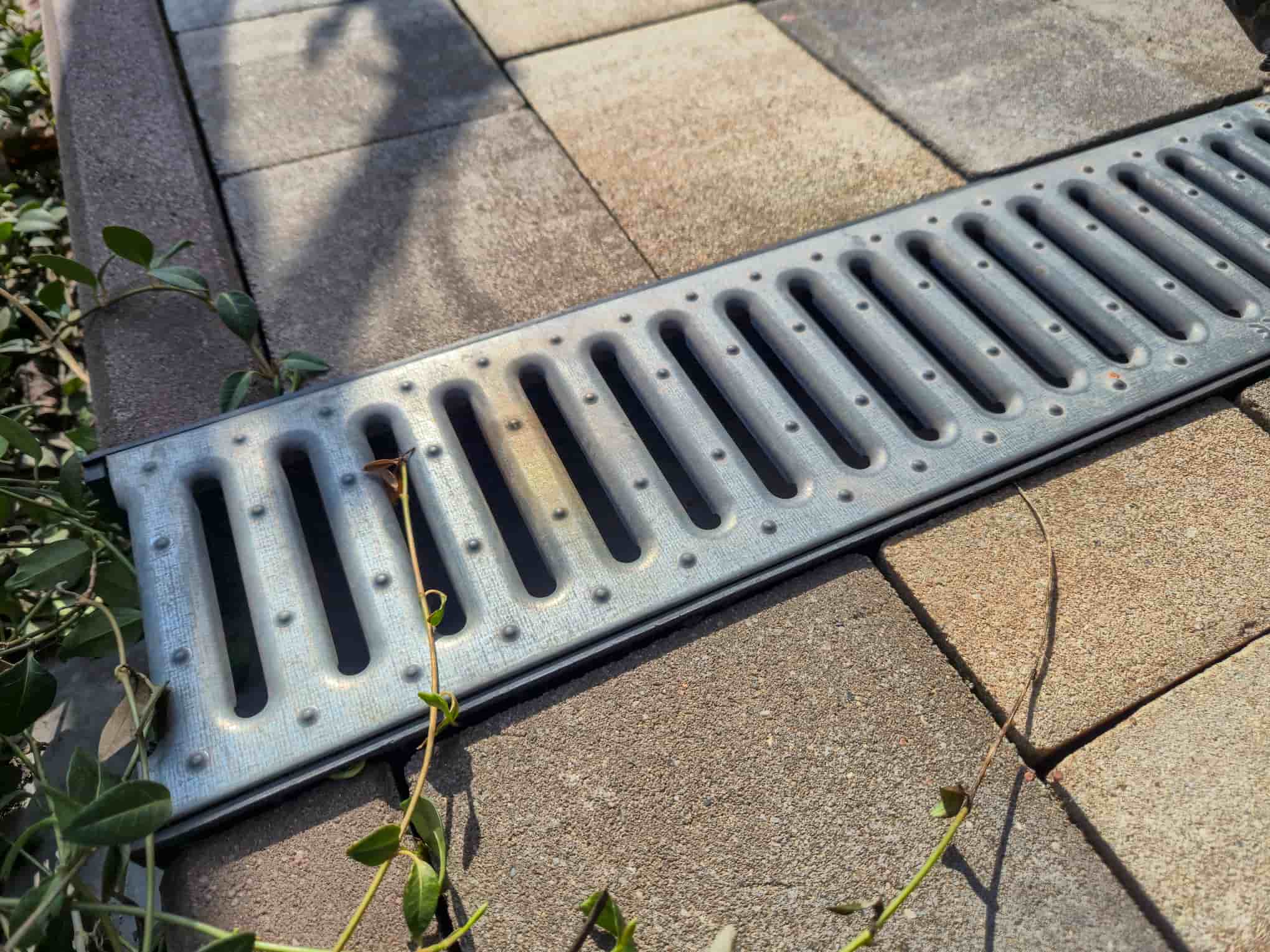
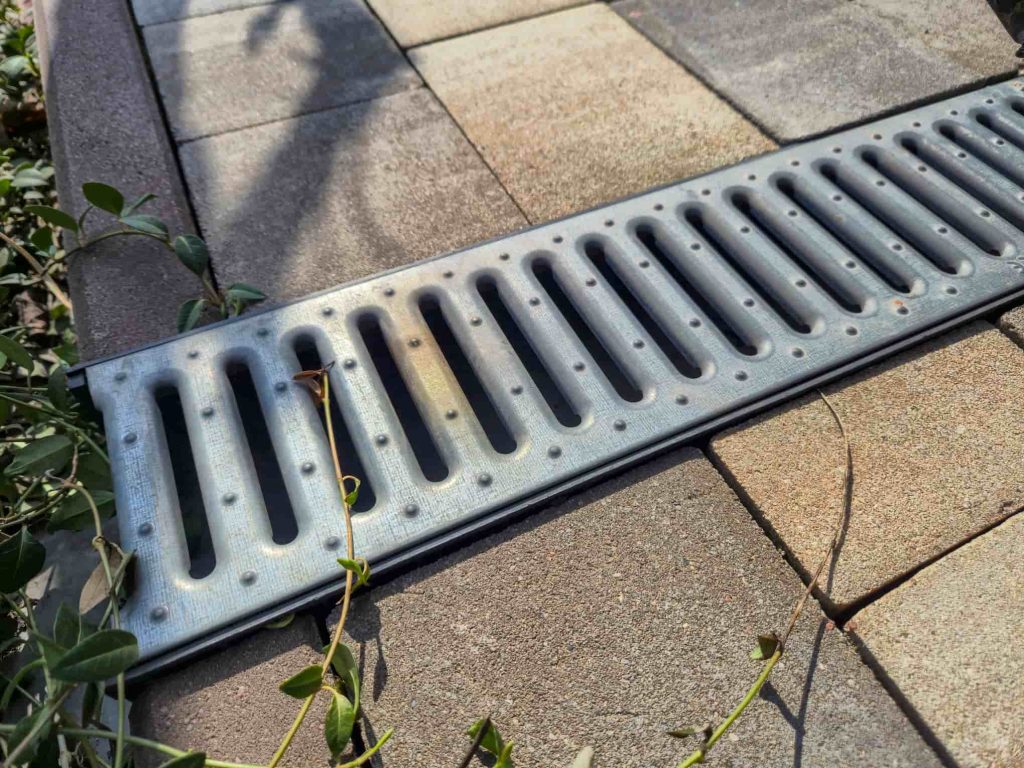
4. Channel Drains — Prevent Surface Water Overflow
Channel drains are installed in paved areas to prevent water from pooling.
Best Uses
- Driveways
- Patios
- Pool decks
- Garage entries
Benefits
- Moves water instantly
- Prevents ice sheets in winter
- Protects pavers from shifting
Channel drains are especially useful in homes with sloped driveways.
5. Dry Wells — Store Water Underground
A dry well collects water and then slowly releases it back into the soil.
Best For
- Yards with no grading outlet
- Heavy clay soils
- Downspout redirection
Dry wells provide an environmentally friendly way to manage stormwater.
6. Downspout Extensions and Pop-Up Emitters
Water from gutters must travel at least 5–10 feet away from your home.
Downspout Solutions Include:
- Buried downspout lines
- Pop-up emitters
- Splash blocks
- Rain gardens
These prevent basement flooding and protect your foundation.
7. Permeable Pavers — Let Water Flow Through
Permeable pavers allow water to pass through joints and into a deep gravel base.
Advantages
- Reduces runoff
- Controls puddling
- Eco-friendly
- Ideal for driveways and walkways
Permeable systems work exceptionally well in areas with frequent flooding.
Why Finding Backyard Drainage Solutions in October Is So Important
Waiting until winter or spring can cause significant damage.
Problems Worsen in Winter
- Ice expands in soil, creating cracks
- Water becomes trapped under patios
- Retaining walls shift
- Soil heaving increases
- Mold spreads in wet basements
Addressing drainage in October protects your home before the freeze–thaw cycle begins.
Backyard Drainage Solutions for Specific Yard Situations
Every property is different, so here are recommended solutions for common scenarios.
Case 1 — Flat Yard With Standing Water
Best Solutions:
- French drain
- Dry well
- Regrading
Case 2 — Sloped Yard Washing Away Soil
Best Solutions:
- Retaining wall
- Terracing
- Swales
- Erosion matting
Case 3 — Water Pooling Near the House
Best Solutions:
- Regrading
- Buried downspout extensions
- French drain
- Foundation drainage
Case 4 — Water Flooding Patio or Walkway
Best Solutions:
- Channel drains
- Permeable pavers
- Patio regrading
Case 5 — Basement Moisture or Mold
Best Solutions:
- Exterior French drain
- Foundation grading
- Downspout management
How Hardscape Professionals Diagnose Drainage Issues
Professional drainage evaluations include:
- Laser-level slope measurements
- Soil absorption testing
- Downspout and gutter inspection
- Property elevation mapping
- Water flow pattern analysis
Homeowners often attempt DIY fixes that only treat symptoms, not root causes. Proper drainage requires professional engineering.
Choosing the Right Backyard Drainage Solutions for Your Yard
The best solution depends on:
- Yard layout
- Soil type
- Home elevation
- Existing hardscapes
- Water direction
- Budget
- Long-term goals
Outdoor Hardscape provides customized drainage plans tailored to each property.
Final Thoughts
Drainage problems are more than an inconvenience — they can cause long-term structural damage if ignored. October is the perfect month to address water issues before winter compounds the problem.
Whether you need a French drain, retaining wall, grading correction, or a combination of systems, solving drainage now protects your yard, home, and investment.
Schedule a Backyard Drainage Solutions Evaluation Before Winter
📞 Call today to book a drainage inspection
📅 Reserve your fall installation slot
🌐 Learn more at OutdoorHardscape.com
Also read,
6 Best Hardscape Materials for Hot Weather: What Works and What to Avoid in New Jersey Summers
Effortless Beauty: 3 Low-Maintenance Hardscape Solutions for Busy Homeowners