
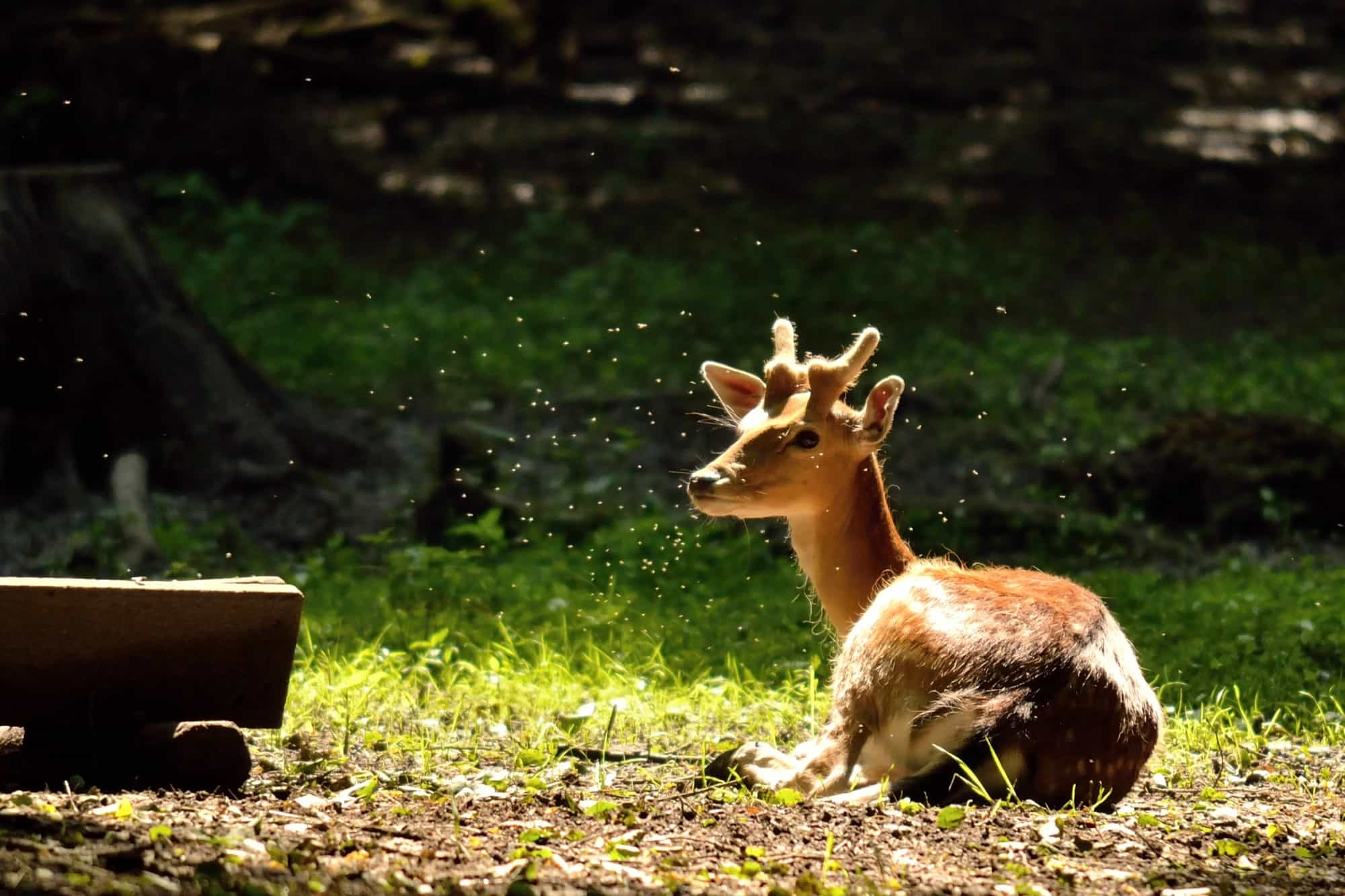
If you garden anywhere near Princeton, Kendall Park, Monmouth Junction, or the rest of Central Jersey, you already know the real threat to your flower beds isn’t drought or blight. It’s a herd of deer that treats your hostas like an all-you-can-eat buffet. Homeowners across Middlesex and Somerset Counties call us every spring asking the same question: how do we build a landscape that actually holds up against deer pressure, instead of replanting the same ruined beds every June?
After years of designing patios, walls, and planting areas throughout Princeton, South Brunswick, and East Brunswick, we’ve learned that the answer isn’t just a list of “deer-resistant” plants from a magazine. It’s how you combine hardscaping with your planting design. Stone, pavers, and structural elements do something plants alone cannot: they change the shape and accessibility of your yard so deer have less reason to stop and browse. This guide walks through what actually works in our area, and how the right hardscape choices protect your landscape investment for years, not weeks.
Why Princeton-Area Yards See So Much Deer Pressure
Princeton and the surrounding Central Jersey towns sit in some of the densest deer habitat in the state. Preserved farmland, wooded corridors along the Millstone and Raritan watersheds, and large suburban lots with mature tree cover give deer plenty of cover and easy access to backyards. Add mild winters and a steady food supply from ornamental plantings, and you get herds that return to the same properties year after year.
This is not a problem you solve with one repellent spray or a single fence panel. Deer are creatures of habit. Once they find an easy meal, they keep coming back, and they teach their fawns the same route. The homeowners who see lasting results are the ones who change the physical layout of the yard, not just the plant list.
Hardscaping Is the Long-Term Deer Deterrent Plants Cannot Provide
Plants get eaten, trampled, or dug up. Stone does not. That is the core reason we push hardscape-first thinking for any Central Jersey property dealing with deer.
A well-placed retaining wall, a raised planting bed, or a properly graded paver patio changes the way deer move through a yard. Deer prefer flat, open, low-effort paths to food. When you introduce elevation changes, defined edges, and hard surfaces where soft mulch used to be, you remove the easy grazing lanes that keep them coming back.
Here is how the most requested hardscape features hold up against deer pressure in our service area.
Raised Beds With Stone or Paver Borders
Raising a planting bed twelve to eighteen inches with a retaining wall block or paver edge does two things. It puts tender new growth slightly out of the most comfortable browsing height, and it signals a defined, maintained space rather than an open buffet. We build these with Techo-Bloc and Unilock wall units most often, since both hold up to our freeze-thaw winters without heaving.
Retaining Walls as Working Barriers
On sloped Princeton and Monmouth Junction lots, a retaining wall solves grading problems and deer problems at the same time. A wall in the three to four foot range, paired with a planting shelf on top, keeps a herd from casually stepping into a bed the way they would on flat ground. Under the New Jersey Uniform Construction Code, walls over four feet trigger engineering review, so we typically design in the sub-four-foot range with terraced steps when a yard needs more total height.
Defined Patios and Walkways Instead of Open Lawn Edges
Every square foot of paver patio or walkway is a square foot deer are not going to graze. Homeowners often assume patios and deer resistance are unrelated, but shrinking the open, soft-edged lawn perimeter around a property genuinely reduces the grazing surface available. A well-planned walkway also lets you route foot traffic, lighting, and irrigation exactly where you want them, instead of leaving wide, unstructured planting borders that are easy for a deer to wander through.
Stone and Gravel Mulch Beds
Loose bark mulch is soft, quiet, and easy for deer to walk through without a sound. A bed edged in natural stone and topped with washed gravel or river stone is noisier underfoot and reads as a harder, less inviting surface. We pair this with drought-tolerant, deer-resistant plantings for beds along driveways and front walks in Princeton, Edison, and Piscataway where full fencing is not an option.
Low Walls and Fencing Integrated Into the Design
A four-foot fence alone rarely stops a determined deer, since they can clear that height without much effort. What works is combining a low retaining wall or paver curb with a fence section above it, effectively adding height without an oversized, unattractive barrier. We often tuck this combination along a rear property line, where it also doubles as a clean transition between lawn and wooded buffer.
Deer-Resistant Plant and Hardscape Pairings We Recommend
Once the hardscape structure is in place, the plant palette matters again, because you are no longer fighting an open, easy-access yard. These are pairings we come back to again and again for Central Jersey clients.
- Raised foundation beds: boxwood, Russian sage, and catmint behind a low Belgard or EP Henry retaining wall along the front of the house.
- Walkway borders: lavender, ornamental grasses, and daffodil bulbs along a paver walkway, since the defined edge and foot traffic keep deer from lingering.
- Fire pit patios: rosemary, yarrow, and salvia planted in the gravel border ring around a stone fire pit seating area, adding fragrance that deer typically avoid right where people gather in the evening.
- Retaining wall terraces: spirea, barberry, and Japanese holly on upper terraces, since the elevation change and the plants’ texture both work against browsing.
- Outdoor kitchen surrounds: herbs like thyme and sage tucked into paver joints or raised planters next to an outdoor kitchen, which are both deer-resistant and useful at the grill.
None of these plants are truly deer-proof. No plant is, no matter what a nursery tag promises. But paired with a hardscape structure that limits access and changes the terrain, they hold up far better than the same plants scattered across open lawn.
Home Value and the Case for Doing This Right
A deer-damaged landscape does more than frustrate a homeowner for one season. It shows up during a home sale walk-through as bare, chewed beds and struggling foundation plantings, which is not the first impression anyone wants for a Princeton or East Brunswick property. Hardscaping that solves the deer problem also happens to be the same hardscaping that appraisers and buyers respond to: defined patios, quality retaining walls, and structured planting beds read as a maintained, invested-in property.
Because pavers and retaining walls are permanent, well-installed hardscape typically holds its value better than plantings alone, which have to be replaced every time deer, drought, or a hard winter takes a toll. Homeowners who combine the two get a yard that looks intentional immediately and keeps looking that way with far less yearly replanting.
How Outdoor Hardscape Approaches Deer-Resistant Design in Central Jersey
We build these solutions as complete systems rather than a patio here and a planting bed there. Depending on the property, that typically draws on several of our core services.
Patio design and installation gives you the defined, hard-surfaced space that reduces open grazing lawn while creating a place to actually enjoy the yard. Retaining walls solve grading issues on sloped Princeton, Kendall Park, and Somerset County lots while doubling as a physical browsing barrier. Walkways and paths route foot traffic and shrink unstructured lawn edges. Landscaping services let us select and place the deer-resistant plant palette correctly once the hardscape structure is in place. For yards that need it, fence installation paired with a low wall adds the height deer cannot clear without the fully enclosed look some homeowners want to avoid.
We also handle the site work that gets overlooked. Central Jersey’s clay soil and freeze-thaw cycles mean a retaining wall or paver patio installed without a proper compacted base and frost-depth footing will heave and shift within a season or two. Every project starts with correct excavation, drainage planning, and base preparation, because a beautiful design on a poor foundation fails the same way an unprotected garden bed does: slowly, then all at once.
Getting Started on a Deer-Resistant Yard
If deer have been undoing your landscaping year after year, the fix usually is not another round of the same plants. It is rethinking the structure of the yard itself, then choosing plantings that work with that structure instead of against it. We walk Princeton, East Brunswick, South Brunswick, Edison, Piscataway, Monmouth Junction, and Kendall Park properties regularly and can usually spot the biggest opportunities for change during a single site visit.
Reach out to Outdoor Hardscape at 908-294-6296 or email edoutdoor790@gmail.com to schedule a consultation. We will walk your property, point out where deer are getting easy access, and put together a hardscape and planting plan built for your specific lot and budget.
Frequently Asked Questions
Q: What hardscape features actually help with deer resistance?
A: Retaining walls, raised paver-edged beds, defined patios, and stone or gravel mulch all reduce the open, easy-access grazing areas that deer prefer. Combined with the right plant selection, these features make a yard significantly less appealing to browse without requiring full perimeter fencing.
Q: Are there truly deer-proof plants for New Jersey yards?
A: No plant is completely deer-proof, especially when natural food is scarce in late winter. Plants labeled deer-resistant, like boxwood, lavender, and ornamental grasses, are simply lower on a deer’s preference list and hold up better when paired with hardscape barriers.
Q: How tall does a fence need to be to stop deer in Princeton yards?
A: Deer can clear fences up to about eight feet under the right conditions, though most will not attempt a jump over six to seven feet when there is little incentive on the other side. Pairing a shorter fence with a retaining wall or raised bed adds effective height without an oversized barrier.
Q: Will a retaining wall really keep deer out of my garden beds?
A: A retaining wall in the three to four foot range makes a bed far less convenient for deer to step into casually, especially when it’s paired with a planting shelf rather than flat, open access. It is not an absolute barrier, but it meaningfully reduces browsing in our experience across Central Jersey properties.
Q: Does hardscaping actually add home value in the Princeton area?
A: Yes. Quality patios, retaining walls, and structured planting beds are permanent improvements that hold their value better than plantings alone and tend to make a strong impression during resale walk-throughs. A yard that has visibly solved its deer damage problem also shows better than one with chewed, struggling beds.
Q: What is the best mulch to use in a deer-prone yard?
A: Washed gravel or river stone mulch is noisier underfoot and less inviting to deer than soft bark mulch, which makes it a strong choice for beds along driveways and front walks where full fencing is not practical. It also drains well in Central Jersey’s clay soil conditions.
Q: How much does a deer-resistant hardscape and landscaping project cost?
A: Costs vary widely based on the scope, from a single raised bed with a stone border to a full patio, retaining wall, and planting overhaul. The most reliable way to get an accurate number is a site visit, since soil conditions, grading, and material choice all affect the final price.
Q: When is the best time to install hardscaping and deer-resistant plantings in New Jersey?
A: Spring and fall are the strongest windows for both hardscape installation and planting in Central Jersey, since the ground is workable and plants establish roots before summer heat or winter freeze. Retaining walls and patios can be built through most of the year as long as the ground is not frozen.